Skip to content

AI Engineering · Computer Vision · Medical AI · Scientific Software When off-the-shelf AI fails, I design the method.

I take AI from research prototype to production: Computer Vision, medical AI, and LLM systems for teams whose problems don't fit standard tools — delivered as tested, maintainable software.

Discuss your project View selected work Available for selected projects from Q4 2026

Intro call ≈ 30 minutes · reply within 24–48 hours · no commitment

HYPERSPECTRAL RESPONSE λ 380–780 nm
380480580680780
Wavelength (nm)
01 Peer-reviewed AI and visualization research in ICPR, IEEE TVCG, Computer Graphics Forum, and IEEE CG&A
02 Three-time IEEE SciVis Contest winner
03 Applied medical AI and Computer Vision research in interdisciplinary teams
04 From research prototype to tested production software
6+ peer-reviewed publications, 2020–2025
IEEE SciVis Contest winner
3 leading journals and conferences: ICPR · IEEE TVCG · CGF · IEEE CG&A
5 problem domains, from medical AI to LLM systems

Expertise

Capabilities grounded in built systems

Grouped by problem, not by tool. Behind every area are systems I have designed, implemented, and evaluated — in research and in engineering projects.

01

Computer Vision & Scientific Imaging

Built hyperspectral imaging workflows covering calibration, spatial alignment, spectral preprocessing, dimensionality reduction, and AI-assisted analysis. Developed deep-learning pipelines for large medical image datasets, including whole-slide processing, patch extraction, and tumor analysis.

Hyperspectral Imaging Medical Image Analysis Calibration Segmentation Representation Learning PCA / UMAP / MDS
02

LLM Systems

Designed and evaluated methods that use LLMs to transform categorical data into meaningful numerical representations. Built repeated evaluation pipelines, embeddings, semantic similarity analysis, and RAG-based workflows.

Embeddings RAG Prompt Engineering Evaluation Pipelines
03

Visualization & Visual Analytics

Research in visual analytics, similarity visualization, and AI-assisted visualization, published in leading venues. I make high-dimensional and spatio-temporal data interpretable for domain experts.

Visual Analytics Similarity Visualization Spatio-temporal Data Dimensionality Reduction
04

Data-Intensive Software

Built reproducible pipelines for large datasets, SQL-backed systems, batch processing, and GPU and HPC workflows, including optimization work on roughly 30 GB of MS SQL data.

Reproducible Pipelines SQL / MS SQL Batch Processing HPC / Slurm
05

Software Engineering

Robust Python applications with testing, containers, CI/CD, and REST APIs. I turn research prototypes into maintainable, tested systems.

Python PyTorch Docker PyTest FastAPI CI/CD

Engagement Models

Three ways we can work together

I take on a small number of projects with research-driven teams — biotech and medical-device companies, scientific R&D labs, and engineering teams working with high-dimensional data. Each engagement is scoped around the problem to solve, not around a fixed toolkit.

Advisory & Feasibility Audit

1–2 weeks

A focused scoping engagement: architecture review, model feasibility, GPU and data-pipeline bottleneck analysis, and data strategy. You get an architecture recommendation with an honest go/no-go and the reasoning behind it — before you commit a full development budget.

Core Implementation & Lead AI Engineering

Project-based

Embedded delivery of the system itself — Computer Vision pipelines, LLM and RAG applications, scientific software. From first prototype through evaluation to a tested, documented handover.

Research-to-Production Retainer

A few days per month

Fractional technical-lead support for internal R&D teams: refining algorithms, establishing evaluation pipelines, and hardening research code for production.

Selected Work

Case studies from research and engineering

These case studies show how I approach AI problems that lack an obvious solution — and what remains at the end: working, maintainable software. Where measurable results are not yet published, I describe the state precisely instead of inventing numbers.

01
Scientific Imaging · Hyperspectral

Hyperspectral Imaging and Calibration

Challenge Hyperspectral cameras produce high-dimensional data that requires careful calibration, alignment, and preprocessing before reliable conclusions can be drawn.
Engineering approach Implemented and improved calibration workflows, analyzed distance-dependent effects such as spatial channel shifts and parallax, and evaluated spectral preprocessing, clustering, and dimensionality-reduction techniques.
My contribution Designed and built the software for repeatable measurements and analysis, from raw sensor data to calibrated, analyzable spectra.
Outcome Enabled repeatable analysis and revealed calibration-related effects that would otherwise distort downstream results.
Python NumPy SciPy scikit-learn
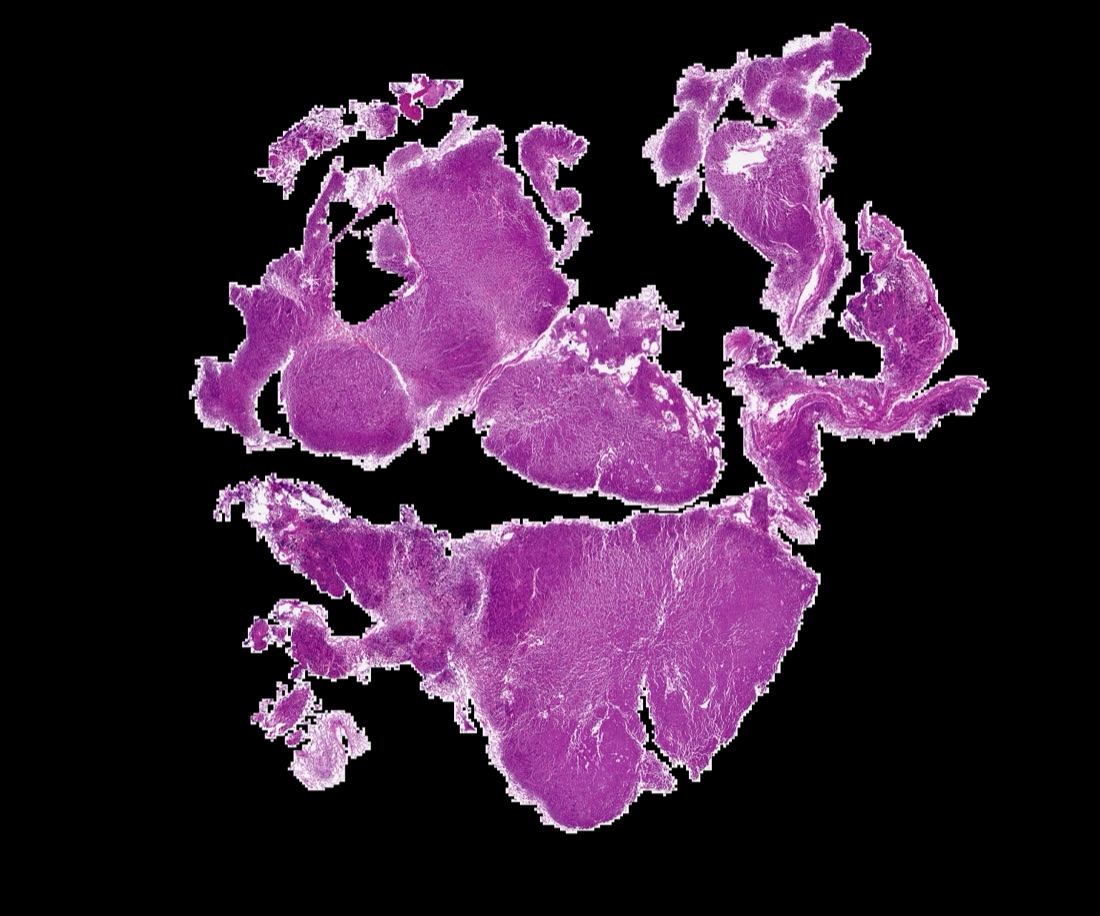
Hematoxylin and eosin stained pituitary whole-slide image H&E · pituitary whole-slide image 02
Medical AI · Digital Pathology

Medical Whole-Slide Image Analysis

Challenge Whole-slide images are enormous and heterogeneous, and tumor-relevant signal is difficult to extract reliably with standard workflows.
Engineering approach Developed pipelines for whole-slide image processing, patch extraction, and dataset preparation, and trained representation-learning and classification approaches for tumor classification and grading.
My contribution Built the processing pipelines and the tools for reviewing image regions and extracted patches, collaborating closely with medical researchers. Given the medical nature of the project, I applied methods from explainable AI (XAI) such as Grad-CAM, so model predictions could be traced back to the tissue regions driving them.
Outcome Created a reusable, explainable foundation for tumor analysis on large medical image datasets — with data preparation, training, and evaluation separated into maintainable components that keep experiments reproducible.
PyTorch OpenSlide Python Deep Learning Grad-CAM / XAI
03
LLM Systems · Embeddings

LLM-Based Categorical Data Representation

Challenge Categorical variables often lack meaningful numerical representations for similarity analysis and visualization.
Engineering approach Designed an experimental pipeline that uses LLMs to derive semantic traits and numerical assignments, with repeated runs and statistical evaluation of similarity and ordering against traditional baselines.
My contribution Designed the method and the automated evaluation, and integrated the results into visualization workflows.
Outcome Supported systematic comparison of LLM-derived representations with established methods, as part of ongoing visualization research.
Python LLM APIs Embeddings Statistical Evaluation
04
Data Engineering · HPC

Large-Scale Data and Research Pipelines

Challenge Large research and business datasets become slow to query and difficult to process reliably as they grow.
Engineering approach Optimized data access and processing for roughly 30 GB of MS SQL data and built automated, reliable data-processing workflows around structured databases.
My contribution Implemented the database optimization and the Python applications connecting analytical pipelines to the data.
Outcome Improved the robustness of the workflow and reduced manual processing.
Python MS SQL Batch Processing Docker
high-dimensional data · interactive projections
05
Visual Analytics · Dimensionality Reduction

Visualizing High-Dimensional Data

Challenge When data has hundreds of dimensions, standard plots hide more than they show — leaving domain experts unable to trust their own datasets.
Engineering approach Designed visualization methods combining dimensionality reduction, machine learning, and interactive visual analytics to reveal hidden structures within high-dimensional data.
My contribution Developed and implemented the methods as part of my research, from prototype to evaluation with domain experts.
Outcome Contributed novel visualization approaches published in leading venues, enabling researchers to better explore and understand complex datasets.
Visualization Visual Analytics PCA / UMAP / MDS Machine Learning

Research

Research that translates into engineering

Research is not a side note here — it is where my engineering standards come from. Peer review forces precise problem statements, honest evaluation against baselines, and reproducible results. I hold client projects to the same bar.

  • Peer-reviewed publications in IEEE Transactions on Visualization and Computer Graphics, Computer Graphics Forum, and IEEE Computer Graphics and Applications
  • Cumulative dissertation in visualization in progress at the University of Münster
  • Taught Computer Graphics and Visualization and supervised students at the University of Münster
  • Three IEEE SciVis Contest wins
  • Research topics include visual analytics, similarity visualization, dimensionality reduction, and spatio-temporal data
  • Interdisciplinary collaboration between computer science and medicine

Technologies

Tools I work with

The problem comes first; these are the tools I reach for to solve it. For technical readers who want the details.

Programming
Python SQL / MS SQL
Machine Learning
PyTorch TensorFlow Keras scikit-learn NumPy SciPy Pandas
Imaging & Computer Vision
Hyperspectral Imaging Whole-Slide Imaging OpenSlide Image Processing PCA / UMAP / MDS
LLMs
LLM APIs Open Weight Embeddings RAG Prompt Engineering Automated Evaluation
Infrastructure & Tooling
Docker Linux Git CI/CD PyTest FastAPI REST APIs HPC / Slurm Apptainer

How I work

A clear, transparent process

Structured, transparent, and hypothesis-driven. You always know where a project stands and why.

1

Understand the Problem

Clarify the real goal, constraints, and data before proposing any method.

2

Assess Feasibility

Test the hardest assumption early and state honestly what is and is not achievable.

3

Build and Validate

Develop the model or system hypothesis-driven, with evaluation built in from the start.

4

Integrate and Scale

Turn the validated approach into reliable, maintainable software that fits your stack.

5

Communicate Results

Explain methods, limitations, and results clearly to technical and non-technical stakeholders.

Why work with me

Research-level depth, engineering discipline

I take ownership from problem definition and architecture through implementation, evaluation, and handover. My background in research, teaching, and interdisciplinary development helps me communicate complex technical decisions clearly.

Research-level depth: when no proven method exists, I can design and validate one

Evidence-driven: hypotheses, baselines, and evaluation pipelines instead of demos that work only once

Honest feasibility assessments — including “this will not work, and here is why”

Ambiguity is my working terrain: vague research questions become scoped, testable engineering plans

Interdisciplinary communication: physicians, researchers, engineers, and decision-makers get the same clear story

Maintainable by default: tested, documented, containerized software your team can extend without me

Key information for recruiters

Everything you need at a glance

A compact overview for recruiters, agencies, and technical decision-makers.

Roles Senior AI / ML / Computer Vision Engineer · Researcher · Technical Lead
Engagement Freelance and contract
Location Münster, Germany · remote preferred
Languages German and English
Core stack Python, PyTorch, TensorFlow, Docker, SQL / MS SQL, FastAPI, GPU / HPC
Domains Medical AI, Computer Vision, Hyperspectral Imaging, Visual Analytics, LLM Systems
Project types Prototyping, R&D, technical leadership, architecture, evaluation, consulting

Need my CV? I'd be happy to share my latest CV together with additional background information.

Request my CV

About

Research meets production software

Karim Huesmann

Karim Huesmann · Münster, Germany

I work at the intersection of research and practical software engineering. My background spans physics, economics, computer science, data analysis, and scientific visualization, an interdisciplinary path that shapes how I approach problems.

I structure complex data problems, develop suitable AI methods, and prepare results so they are reliable and understandable. I move quickly into new domains and collaborate closely with researchers, engineers, medical experts, and decision-makers.

The problems I enjoy most are the ones without an obvious solution — where the method has to be designed, not just applied. Alongside client work I am completing a doctorate in visualization at the University of Münster, where I have taught and supervised students. That work keeps me close to how ideas become reliable systems.

Path

Economics
Physics
Computer Science & Visualization
Machine Learning & Computer Vision
Medical AI
LLM Systems
Freelance AI Engineering

Trust & links

Find me here

Published in IEEE TVCG Computer Graphics Forum IEEE CG&A

FAQ

Common questions

What types of AI projects do you work on?

Computer Vision and imaging systems, including hyperspectral and medical whole-slide pipelines, LLM and RAG applications with evaluation pipelines, and reproducible scientific software for data-intensive problems. Engagements range from prototypes to productization and technical consulting.

Do you work remotely?

Yes. I work remote-first from Münster, Germany, with occasional on-site workshops or kick-offs across Europe.

Can you develop Computer Vision systems?

Yes. I have built image-analysis pipelines covering calibration, preprocessing, segmentation, representation learning, and deep-learning classification for scientific and medical data, including hyperspectral imaging and whole-slide image processing.

Can you help with LLM and RAG applications?

Yes. I design grounded LLM workflows with embeddings, semantic similarity, prompt engineering, and RAG, and I build repeated evaluation pipelines that measure them against established baselines.

Do you collaborate with research teams?

Yes. I am an active researcher with peer-reviewed publications in IEEE TVCG, Computer Graphics Forum, and IEEE CG&A, and I have worked in interdisciplinary teams across computer science and medicine.

How do you approach AI consulting projects?

I start with the problem and the data, test the hardest assumption early, and give an honest feasibility assessment. Development is hypothesis-driven with evaluation built in, and results are handed over as tested, maintainable software.

Are you available for new projects?

Yes, for selected projects from Q4 2026. For larger engagements it helps to reach out early.

Contact

Have an AI problem where standard solutions fall short?

Describe it in a few sentences — no pitch deck needed. You will get a personal, honest assessment of whether and how I can help. And if I am not the right person for it, I will tell you that too. You talk directly to me — there is no team and no sales layer behind this form.

Prefer email or LinkedIn?
What would you like to discuss?

I usually reply within 24–48 hours. No commitment required.